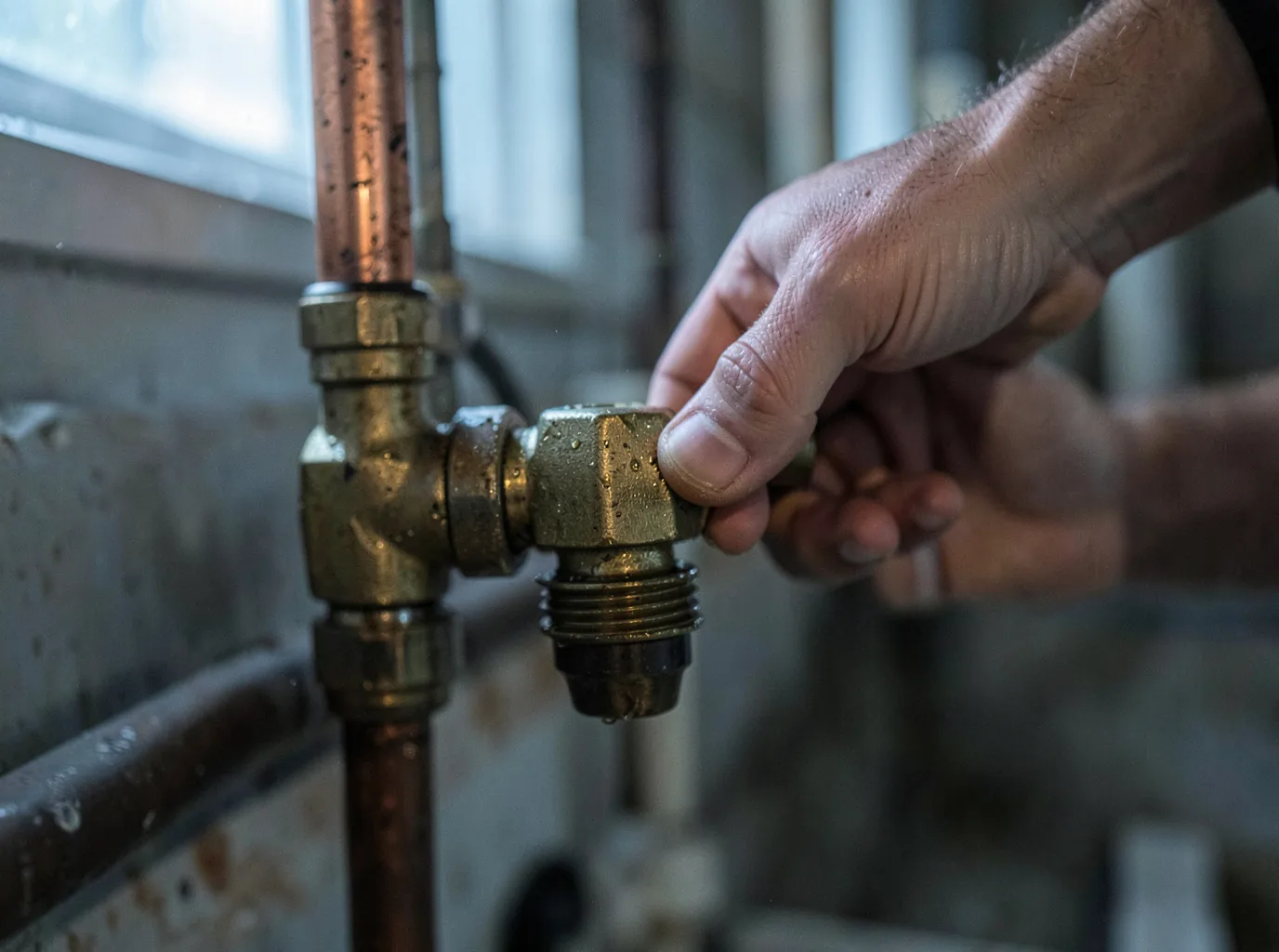
You hear it before you see it sometimes: a hiss, a bang, then water where there shouldn't be any. A burst pipe doesn't give much warning, and once it lets go the damage compounds fast. Here's what to do and what happens next.
First: Shut The Water Off
Before anything else, find your main water shut-off valve and turn it off. This stops feeding the leak while you sort out the rest. If the burst pipe is near an electrical outlet, appliance, or panel, and it's safe to do so, cut power to that area at the breaker too. Then call (831) 300-2203 to get connected with a plumber working in Guadalupe, CA.
How You Know It's A Burst Pipe And Not Something Smaller
A burst pipe usually announces itself. Water pressure in the house drops suddenly or disappears. You hear running water inside a wall or under a floor with no faucet on anywhere. A ceiling starts sagging or staining. A wall feels damp or bulges. Outside, you might notice a soggy patch of yard that wasn't wet yesterday, or water pooling near the foundation with no rain to explain it. Inside, water pipe burst inside house situations often show up first as a wet spot spreading across drywall or a puddle appearing under a sink cabinet with no obvious source.
If the pipe fully split, you'll likely know right away, there's just water, sometimes a lot of it, appearing fast. A partial crack is quieter: a slow but steady leak that gets worse as the crack widens under pressure.
Why Pipes Break
Freeze and thaw cycles are the classic cause. Water expands as it freezes, and if it's trapped in a pipe with nowhere to go, the pipe cracks, sometimes not until it thaws and pressure pushes water through the split. This is common in frozen pipe situations during cold snaps, especially in pipe runs along exterior walls, in unheated crawlspaces, or in attics.
Beyond freezing, pipe breaks happen from old age (galvanized steel and some early plastics degrade from the inside), from high water pressure that stresses fittings and joints over years, from tree roots pressing on buried lines, from a nail or screw driven through a pipe during a remodel, and from soil movement that shifts a buried line until a joint gives out. Copper corrodes in some water conditions; PVC gets brittle with age and UV exposure if it's exposed; even newer PEX can fail at a poorly made connection.
What The Plumber Does On Site
First step is always finding the exact break point, which isn't always where the water is showing up, water travels along framing and pools somewhere lower than the actual crack. The plumber traces it using the wet path, sometimes with a moisture meter, and may need to open a small section of drywall, ceiling, or flooring to get direct access.
Once the break is exposed, the repair depends on the pipe material and how much of the run is damaged. A single cracked section of copper or PEX often gets a straight cut-and-coupling repair: remove the damaged piece, solder or crimp in a new section. A longer run of old galvanized or a section riddled with corrosion usually needs full replacement rather than a patch, since one repair just means the next failure point is a few feet away.
For pipes that are hard to reach, buried under a slab, or running through finished walls, some plumbers use pipe bursting or other trenchless methods that avoid tearing out large sections of floor or wall. It's not always the right tool for every job, but it's worth asking about when you call (831) 300-2203 if the access is going to be a mess otherwise.
What Moves The Price
The plumber prices the job after seeing it, not before, but a few things generally affect the number: how accessible the pipe is (open crawlspace versus inside a finished wall you'd need to cut into), the pipe material, how much of the run needs replacing versus a single patch, and whether it's an after-hours or holiday call. You'll get the price before any work starts.
What To Do While You Wait
- Shut off the main water valve
- Move furniture, rugs, and boxes away from the wet area
- Open cabinet doors under sinks so air can circulate
- Use towels or a wet/dry vacuum on standing water if it's safe
- Photograph the damage for your insurance before cleanup starts
- Don't try to patch the pipe yourself with tape or clamps meant as a permanent fix, it buys minutes, not days
Why Call This Line
This is a referral service, not the company standing in your driveway, and we tell you that plainly: we connect you with an independent local plumber serving Guadalupe, CA, and that plumber does the actual repair and sets the price on site. What we offer is one call that routes you to a plumber working in your area, instead of you calling around to five companies that don't pick up. The line runs around the clock, so a burst pipe at 3am gets the same response as one at 3pm.
If the break turns out to be a slow crack rather than a full burst, that's covered too under leaking pipe repair, and if cold weather caused it, ask about frozen pipe thawing as well since both often go together.
Questions people ask about burst pipe repair
How do you know if a pipe burst versus just a small leak? A burst pipe usually means a sudden drop in water pressure, water appearing fast in volume, or a sound of running water with nothing turned on. A small leak is slower and often shows up as a damp spot that grows gradually over days. Either way, shutting off the main valve is the right first move.
What happens when a pipe bursts inside a wall? Water follows gravity and gaps in framing, so it often travels before it shows up as a stain or wet spot, which can be several feet from the actual break. That's why plumbers trace the leak rather than just cutting into the first wet spot they see.
Can a plumber fix a burst pipe the same day? Often yes for a single-section repair, especially copper or PEX. Larger jobs involving old galvanized pipe, extensive corrosion, or hard-to-reach sections may need more time or a follow-up visit for parts, which the plumber will explain after seeing the damage.
Will homeowners insurance cover a burst pipe repair? Many policies cover sudden pipe bursts and the resulting water damage, though coverage details depend on your policy and the cause. Photograph the damage before cleanup and keep any repair paperwork; that's what an adjuster will ask for.
How do I stop a burst pipe from getting worse before the plumber arrives? Shutting off the main water valve is the single most effective step. After that, cutting power near the wet area if there's any electrical risk, and moving belongings away from the water, limits secondary damage while you wait.
Water damage spreads by the minute. If a pipe has let go somewhere in your house in Guadalupe, CA, shut off the main valve and call (831) 300-2203 to get connected with a plumber now.